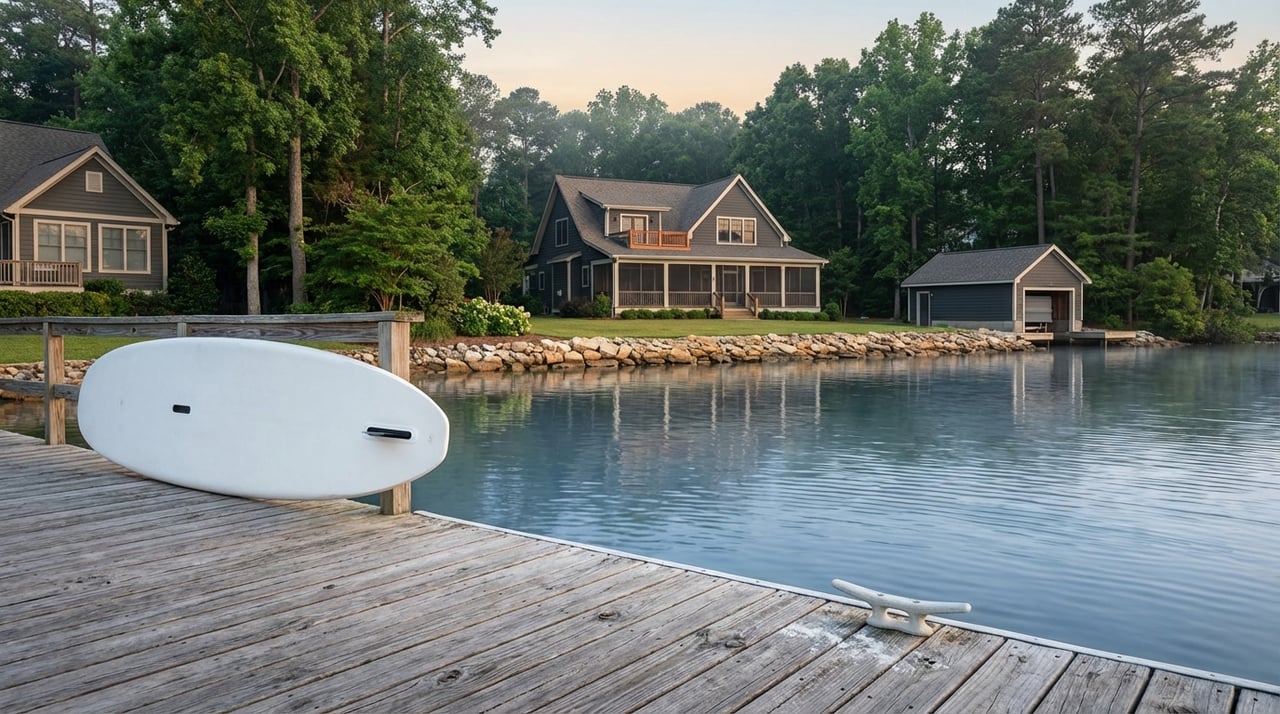
Craving quiet coves, glassy mornings, and fewer wakes under your paddleboard? If you are comparing Lake Anna’s public and private sides, you are likely weighing peace and privacy against convenience and on-the-water services. You want the real differences, not the marketing gloss, so you can choose with confidence. In this guide, you will learn how the private side actually lives, what it does best, where the tradeoffs show up, and the exact due diligence to complete before you buy. Let’s dive in.
What “private side” means
Lake Anna functions like two connected lakes. The public side is about 9,000 acres and the private, or warm, side is about 4,000 acres, divided by engineered dikes that block boat travel between them. The private side stays warmer because it receives the heated discharge used to cool the North Anna power station. That circulation extends the swim and boating season for many owners. You will also find that access on the private side is limited to property owners, their guests, and authorized users, so day-trippers and rental fleets operate on the public side instead. For an overview of size, warmth, and the dikes, see the local Lake Anna FAQ.
How the water feels day to day
You will notice calmer water and less crowding on the private side, especially on summer weekends. With fewer transient boats and no marina traffic, quiet coves are easier to find. That makes it a favorite for kayaking, paddleboarding, fishing, and relaxed swimming. Social hours on docks tend to be more peaceful, and wake activity is easier to avoid or time around.
Activities that shine here
You can enjoy the same core water sports you see on the public side, including skiing, wakeboarding, tubing, and jet skis. State boating laws still apply to everyone on both sides, including no-wake zones and operator requirements, so take a minute to review Virginia’s boating laws. Individual HOAs often add local rules such as quiet hours, guest limits at common areas, or no-wake buffers near community docks. If you love early paddles, mellow fishing, or swimming without heavy chop, the private side is a natural fit.
Services and marinas access
There are no public marinas or public fuel docks on the private side. Waterfront restaurants and most rental operators are located on the public side. If you plan to boat to a marina, dine on the water, or rent gear frequently, expect to drive to the public side or plan ahead for fueling and supplies. The Lake Anna FAQ covers this high-level split, and local boating guides outline that rentals and public launches operate from public-side marinas.
Water temperature and safety
Warmer private-side water often feels great in spring and fall. It can also contribute to conditions that favor harmful algal blooms in certain branches and years. The Virginia Department of Health issues area-specific advisories when conditions warrant and recommends avoiding activities like swimming, windsurfing, and stand-up paddleboarding in affected areas. Before you swim or send guests out on boards, check the current VDH SwimHealthyVA advisory updates for Lake Anna. For broader context on past impairment listings connected to cyanobacteria, review this Chesapeake Bay Foundation summary.
Emergency response on the private side
The dikes that separate the two sides also affect rescue logistics. Public-side rescue boats cannot transit the dikes, which can mean longer response times for incidents on the private side. Some communities support volunteer watercraft or coordinate with civic groups to improve coverage. If you will host children, new boaters, or renters, ask how water rescues are handled in your specific neighborhood. The Lake Anna Civic Association has documented these response considerations, which you can read about on the LACA site.
Property types you will find
You will see three common property models on the private side:
- Waterfront: Direct shoreline with private dock or boathouse. These command the highest prices and deliver instant lake access.
- Water-access: Off-water homes with deeded or HOA-controlled access to a community common area, often with ramps and slips. This is a popular and more affordable way to live the lake lifestyle.
- Off-water with no deeded access: You enjoy the neighborhood setting, but you rely on public-side marinas for launching and services.
Many subdivisions offer common-area amenities such as beaches, pools, courts, ramps, and assigned or purchasable slips. Policies vary by HOA, so do not assume slip rights or availability. A few rare neighborhoods near the dikes even offer access to both sides, which can be a premium feature. Always confirm those rights in recorded documents before you rely on them.
HOA rules and short-term rentals
Most private-side neighborhoods use covenants and HOA rules to manage docks, noise and quiet hours, guest access, and parking. Short-term rental policies differ widely by community, and county rules layer on top of that. Louisa County has a Short-Term Rental Ordinance and requirements that you should review before you buy or list a home for STR use. Start with the county’s Short-Term Rental page to confirm registration, zoning, and occupancy standards, which can be tied to septic capacity.
Decision guide: a quick fit check
The private side is likely a good match if you:
- Want quieter water, less boat traffic, and small-craft friendly coves.
- Appreciate a longer swim season and are comfortable monitoring HAB advisories.
- Like the idea of community amenities and are fine operating within HOA rules.
It may not be ideal if you:
- Expect frequent marina visits, fuel by boat, or waterfront dining by boat.
- Need the fastest possible on-water rescue response without local volunteer coverage.
- Plan to run a high-occupancy STR without confirming HOA and county rules or septic capacity.
Due diligence checklist before you buy
Work through these items early in your evaluation. They protect your lifestyle goals and your investment.
Verify lake access status. Confirm whether the property is waterfront, water-access with deeded rights, or off-water with no access. Ask for the recorded deed and plat that show riparian rights or common-area rights and any slip assignment language.
Get the full HOA or POA package. Request CCRs, bylaws, rules, budgets, recent minutes, and a current fee and special assessment statement. Look for slip ownership or lease rules, waiting lists, quiet hours, guest policies, and dock design standards.
Confirm short-term rental rules. Check both HOA policy and county requirements. Louisa County’s STR ordinance outlines registration and enforcement, and occupancy can be linked to the approved septic capacity. Review the county’s STR guidance before you plan revenue.
Septic, well, and utilities. Obtain the septic permit and drainfield records, plus any shared-system agreements and maintenance history. Over-occupancy stresses systems and can contribute to nutrient loading that worsens HAB risk. Verify broadband options if you plan year-round use.
Dock and boathouse permits. Confirm that existing structures are permitted and compliant. Ask the HOA and the county building department about size limits, slip counts, setbacks, and any shoreline rules that apply to new work.
Water quality checks. Before endorsing frequent swimming or paddling, review current advisories on the VDH SwimHealthyVA updates for Lake Anna. Conditions vary by branch and by season.
Emergency services plan. Ask the HOA or seller how on-water emergencies are handled on the private side, including any volunteer resources. Learn more about response constraints on the LACA site.
Boating logistics. If you plan to trailer to public-side marinas or use rentals, map drive times from the property to your preferred launch. For context on public-side marina operations and safety basics, review this local boating navigation and safety guide.
State boating rules. Refamiliarize yourself with Virginia’s no-wake definitions, operator education requirements, and age rules in the state boating code. Many HOAs reference these in their handbooks.
Market context and pricing. Waterfront with true boathouse rights drives premiums, while water-access often delivers strong value. Use current MLS comps and community-by-community nuance to set expectations.
Next steps to buy with confidence
Choosing the private side is not just about a view. It is about how you will actually use the water, host family and friends, and maintain your property with fewer commercial services close by. If that picture fits you, the next step is to verify the specifics for your short list of homes and confirm that the HOA, access rights, septic, and shoreline rules all align with your plans.
If you want a trusted, local partner to guide you through the technical pieces and the lifestyle fit, we are here to help. Schedule a Free Consultation with Sunset Properties at Lake Anna for tailored advice on docks and permits, HOA analysis, water-access versus waterfront tradeoffs, STR feasibility, and up-to-date market comps. We live this lake every day and will help you find the right home on the side that matches how you want to live.
FAQs
What is the Lake Anna private side and who can use it?
- The private side is a roughly 4,000-acre warm-water section separated by dikes where lake use is limited to property owners, their guests, and authorized users, as outlined in the Lake Anna FAQ.
Are there marinas or fuel docks on the Lake Anna private side?
- No, there are no public marinas or public fuel docks on the private side, so plan to drive to public-side marinas for fueling, rentals, and waterfront dining, per the Lake Anna FAQ.
How do harmful algal bloom advisories affect swimming on Lake Anna?
- When advisories are active for specific branches, the Virginia Department of Health recommends avoiding water-contact activities like swimming and paddleboarding; check the latest VDH SwimHealthyVA updates before you go.
Do HOAs on the Lake Anna private side allow short-term rentals?
- Policies differ by community, and county rules also apply, so confirm both the HOA’s governing documents and Louisa County’s Short-Term Rental Ordinance before you buy or list.
Is the private side good for wakeboarding and tubing?
- Yes, the same core water sports are allowed subject to state boating laws and HOA rules such as no-wake zones and quiet hours; review Virginia’s boating code and your community handbook.
How does emergency response work on the private side of Lake Anna?
- Because rescue boats cannot cross the dikes, response can take longer on the private side, and some communities support volunteer coverage; learn more on the LACA emergency response page.
Can you boat between the public and private sides of Lake Anna?
- No, the dikes physically separate the two sides for boats, so if you own on the private side you will operate within that side unless you trailer by road, as noted in the Lake Anna FAQ.