Wondering whether you really need true waterfront at Lake Anna, or if water-access could give you the lifestyle you want for less? It is one of the most important decisions buyers make here, and it affects everything from your budget to your daily routine on the lake. If you are weighing convenience, upkeep, resale, or rental potential, this guide will help you compare both options in a practical way. Let’s dive in.
Why this choice matters
At Lake Anna, the difference between waterfront and water-access is more than a real estate label. It shapes how you use the property, what you pay upfront, and what responsibilities come with ownership.
Lake Anna is about 17 miles long with roughly 200 miles of shoreline. According to Louisa County’s Lake Anna overview, the public side, often called the cold side, includes about 9,000 acres with marinas, parks, and public fishing areas, while the private warm side covers about 4,000 acres connected by three canals. That means your experience can vary based on both your property type and the side of the lake.
Lake Anna State Park also adds a public boat launch, beach, fishing pond, and bank-fishing access. So even if a home is not directly on the shoreline, you may still have plenty of ways to enjoy the water.
What waterfront means
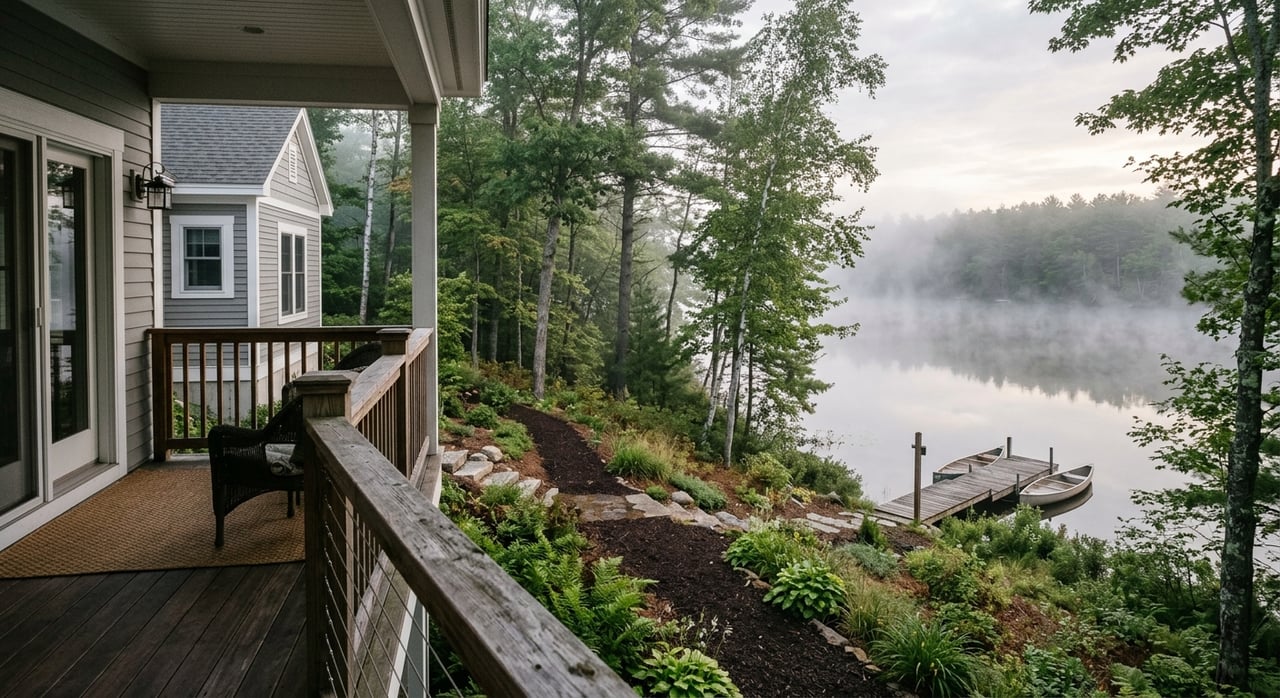
A waterfront home touches the shoreline directly. In many cases, that means you may also have features like a dock, boathouse, sandy beach area, or even a private boat ramp.
In recent Lake Anna listings, waterfront homes have included about 110 to 140 feet of shoreline, deep-water access, covered boathouses with electric lifts, private beaches, and private ramps. In simple terms, waterfront is the premium option because it gives you the most direct and private connection to the lake.
Best fit for waterfront buyers
Waterfront often makes the most sense if you want lake access to be part of your everyday routine. If your goal is to wake up to water views, walk outside to your dock, and spend as little time as possible getting on the lake, this option usually delivers that experience best.
It can also be a strong fit if private outdoor living is a major priority. For many buyers, the value is not just the water itself, but the convenience and setting that come with it.
What water-access means
A water-access property does not sit directly on the shoreline, but it includes some form of shared or designated access to the lake. That might be a common area, assigned slip, deeded slip, community dock, or neighborhood boat ramp.
At Lake Anna, water-access homes can vary a lot. Some are just a short walk or golf-cart ride from the water and come with strong amenities like beaches, docks, pools, clubhouses, or marinas. Others offer more basic access, so it is important to understand exactly what comes with the property.
Slip type matters more than many buyers expect
Not all lake access works the same way. Local market commentary notes that water-access homes may come with assigned, deeded, leased, or first-come-first-served slips.
That detail can affect convenience, value, and how the property feels in day-to-day use. A deeded slip in a well-maintained community can make a water-access home feel surprisingly close to waterfront living, while a less certain setup may feel less flexible over time.
Price differences at Lake Anna
For most buyers, budget is where the waterfront versus water-access decision becomes very real. A local early 2025 market report cited the overall Lake Anna median sold price at around $572,000, with waterfront homes typically listed from about $750,000 to over $2 million and water-access homes ranging from about $300,000 to $800,000.
Recent listing examples show how wide that range can be. Water-access homes have recently been listed around $408,000 and $975,000, while waterfront examples have been listed around $1.349 million and $2.995 million. So while water-access is often the lower entry point, it is not automatically a bargain tier.
Is water-access always cheaper?
Usually, yes, but not always by as much as buyers assume. Amenity-rich communities and homes with deeded slips can still command upper-six-figure prices.
Direct shoreline still tends to carry the premium. If your budget is flexible but not unlimited, water-access may let you buy a larger home, more updated finishes, or a stronger community setup without paying full waterfront pricing.
Upkeep and ownership costs
The day-to-day cost of ownership is one of the biggest differences between these two options. Waterfront gives you more privacy and control, but it can also come with more responsibility.
According to Louisa County shoreline regulations, shoreline work may require review and, in some cases, Dominion approval. Significant disturbance can trigger permanent stabilization requirements, recorded maintenance agreements, vegetative buffer rules, and restrictions on over-water structures.
The county also notes that boat wave action contributes to shoreline erosion. So if you own waterfront, part of your long-term planning should include shoreline condition, dock logistics, and what future maintenance may involve.
Water-access can reduce shoreline burdens
Water-access buyers usually avoid direct shoreline stabilization responsibilities. That can be appealing if you want the lake lifestyle without taking on as much shoreline-specific maintenance.
That said, shared access still needs oversight. Your experience will depend on the condition and governance of the common area, dock, slip, and ramp, so reviewing community rules and maintenance standards is important.
Lifestyle and convenience
The best choice often comes down to how you plan to use the property. If you are full-time at the lake or expect to be on the water often, convenience may matter more than square footage.
Local market commentary suggests waterfront is often the better match when daily lake use, views, and private outdoor living are the main goals. Water-access can be the better value play when you want to keep more of your budget for house size, land, or interior finishes and do not need to step onto the water every day.
Weekend use vs full-time living
For frequent weekend use, waterfront gives you the easiest routine. You can arrive, unload, and get on the water without coordinating around a shared dock or common area.
But water-access can still work very well for second-home buyers. If the property includes a deeded slip and the walk or golf-cart ride is short, the experience can feel much closer to waterfront than many buyers expect.
Side of lake still matters
Even after you choose between waterfront and water-access, you still need to think about where on Lake Anna you want to be. The public side and private side offer different access patterns, amenities, and day-to-day feel.
As Louisa County explains, the public side includes marinas, parks, and public fishing areas. That can be a major plus if you want broader recreational access nearby, while the private side may appeal to buyers focused on a different pace and setting.
This is why the right property is not just about the shoreline label. It is about how the location, access style, and community setup support the way you want to use the lake.
Resale and market pace
Buyers also ask how these categories perform when it is time to sell. A March 2026 local pricing analysis reported median days on market of about 42 days for waterfront homes versus about 90 days for water-access properties.
That does not mean every waterfront home sells faster or every water-access home sits longer. It does suggest that direct shoreline tends to hold a stronger premium and can attract quicker buyer attention, while water-access buyers may compare more options at similar price points.
Think beyond today’s purchase
If resale is top of mind, it helps to think about what future buyers will care about most. For waterfront, that may include shoreline quality, water depth, dock usability, and views.
For water-access, buyers often focus on the exact slip arrangement, the ease of getting to the water, and how well the community maintains shared amenities. The clearer and stronger those details are, the more competitive the property may feel later.
What investors should check first
If you are buying with short-term rental income in mind, do not assume either property type automatically works better. The key question is not just whether the home is waterfront or water-access. It is whether the specific parcel is eligible and practical for rental use.
Louisa County’s short-term rental ordinance defines short-term rentals as stays under 30 days and applies different rules depending on zoning. Some properties are allowed by-right, while others may require a conditional use permit.
Verify before you count on income
Before you build rental projections into your search, confirm zoning, HOA or POA rules, and county registration requirements. A waterfront home may look ideal for guests, but that does not automatically mean it is approved for the rental strategy you want.
The same is true for water-access homes. Community amenities can be a major draw, but the property still needs to align with local rules and your ownership goals.
A simple way to decide
If you want the shortest path from your back door to the water and you are comfortable paying for that convenience, waterfront is usually the right answer. If you want to lower your entry price, reduce shoreline-specific upkeep, and still enjoy the lake through a slip or common area, water-access may be the smarter fit.
A good next step is to narrow your options using three filters:
- Side of lake
- Slip type or dock access
- Rental rules, if investment matters
Once you compare properties through that lens, the decision usually becomes much clearer.
Buying at Lake Anna is rarely about choosing the most obvious option. It is about choosing the version of lake living that fits your budget, routine, and long-term plans. If you want help comparing waterfront and water-access homes in a practical, property-by-property way, Sunset Properties at Lake Anna can help you sort through the details and move forward with confidence.
FAQs
What does waterfront mean at Lake Anna?
- A waterfront property at Lake Anna directly touches the shoreline and may include features like a dock, boathouse, beach area, or private ramp.
What does water-access mean at Lake Anna?
- A water-access property at Lake Anna is off the shoreline but includes some type of lake access, such as a common area, community dock, assigned slip, deeded slip, or neighborhood ramp.
Is a Lake Anna water-access home always less expensive than waterfront?
- Not always, but waterfront is usually the premium category. Recent examples showed water-access homes listed from about $408,000 to $975,000 and waterfront homes from about $1.349 million to $2.995 million.
Can Lake Anna waterfront owners build anything they want on the shoreline?
- No. Louisa County shoreline regulations and, in some cases, Dominion review can affect shoreline work, structure placement, stabilization, and construction details.
Are Lake Anna short-term rentals allowed for both waterfront and water-access homes?
- It depends on the property. Louisa County applies short-term rental rules based on zoning, and buyers should also verify HOA or POA restrictions and required registrations.
Which Lake Anna property type is better for weekend use?
- Waterfront offers the most convenience for frequent weekend use, but water-access can work very well too, especially if the home has a deeded slip and easy access to the common area.